
LAKEYIS TA NOYENLHI FWÄ-AY HÄP TÄHES-NA TÄ WATLAK NOWOYE TÄ NOYENLHI FWA-AY MOK (En wichi)
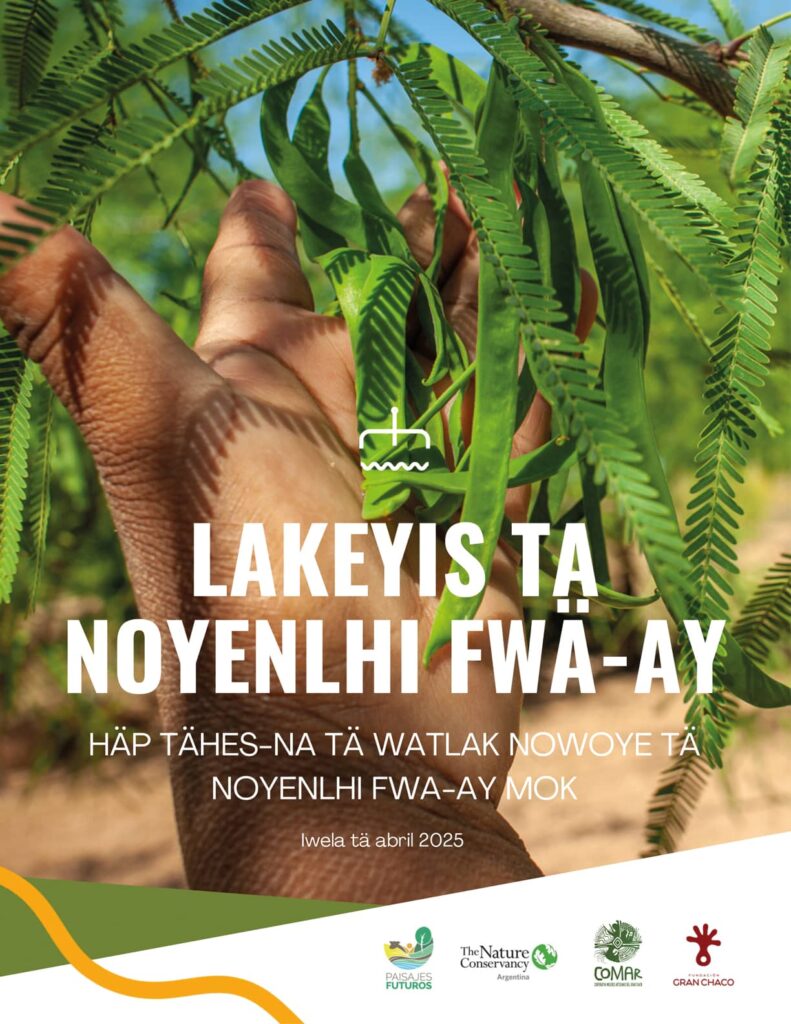
El presente documento tiene como objetivo brindar una guía práctica para mejorar la producción de harina de algarroba, promoviendo buenas prácticas a lo largo de todas las etapas del proceso, desde la recolección hasta el envasado. Busca identificar problemas frecuentes, proponer soluciones concretas y definir responsabilidades para asegurar la calidad e inocuidad del producto. Asimismo, pretende fortalecer las capacidades de productores y organizaciones, optimizando la eficiencia del proceso, reduciendo riesgos de contaminación y mejorando el valor agregado de este recurso local.
Governance analysis of telecoupled systems (Argentina -EU)
This document aims to analyze the environmental governance of the soybean value chain between Argentina and the European Union from a telecoupling perspective. It seeks to understand how the interaction between Argentina’s Forest Law and the European Union Deforestation Regulation (EUDR) shapes deforestation dynamics, production systems, and local incentives. The analysis identifies key opportunities, tensions, and implementation challenges, while providing evidence to inform more coherent and effective regulatory frameworks that support forest conservation and align with the needs, knowledge, and livelihoods of local stakeholders.
Regenerative calf Production Business Plan – Argentinian Chaco
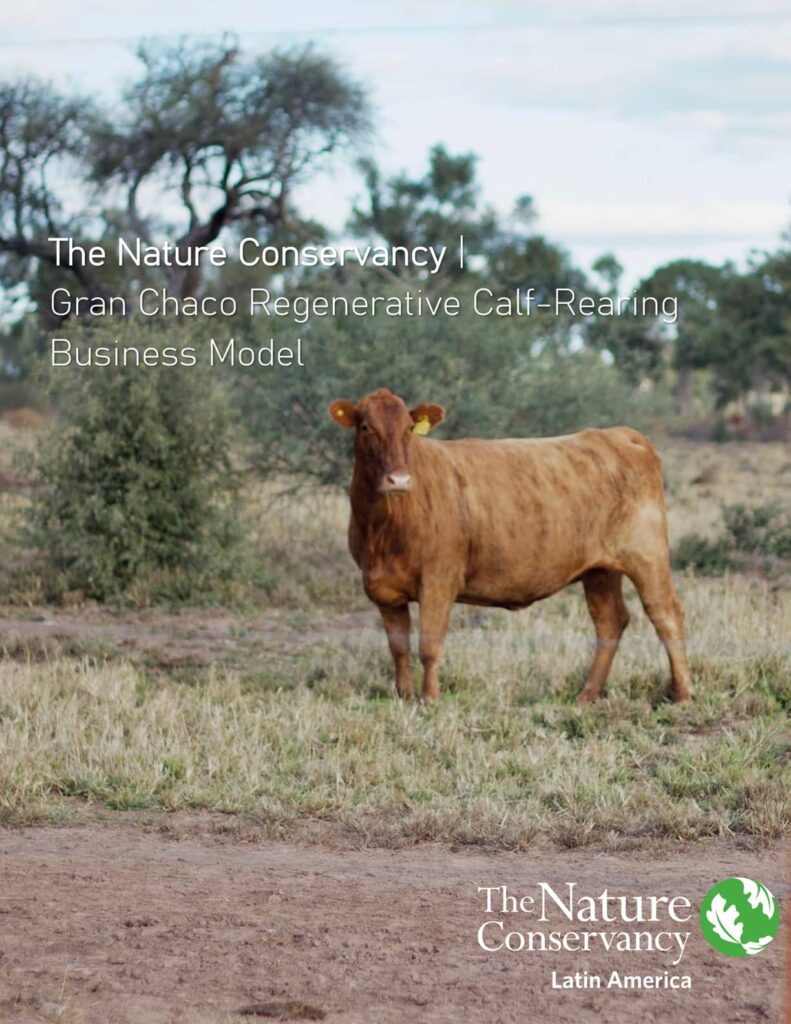
This document aims to define and describe a cooperative business model for raising and marketing calves in the Gran Chaco region of Argentina, targeting family-run production systems. It seeks to integrate regenerative livestock farming practices that improve productivity, increase income, and facilitate access to formal markets. Furthermore, it aims to promote the conservation and restoration of dry forest ecosystems, strengthening productive resilience, social inclusion, and the sustainable use of natural resources in the region.
Regenerative Business Models (RBM)
This conceptual framework defines a regenerative business model, providing guiding principles for companies and individuals operating within agricultural value chains. It delivers added value through a practical toolkit designed to apply the core principles of RBM.
Conceptual Framework for Regenerative Ranching and Agriculture (R2A)
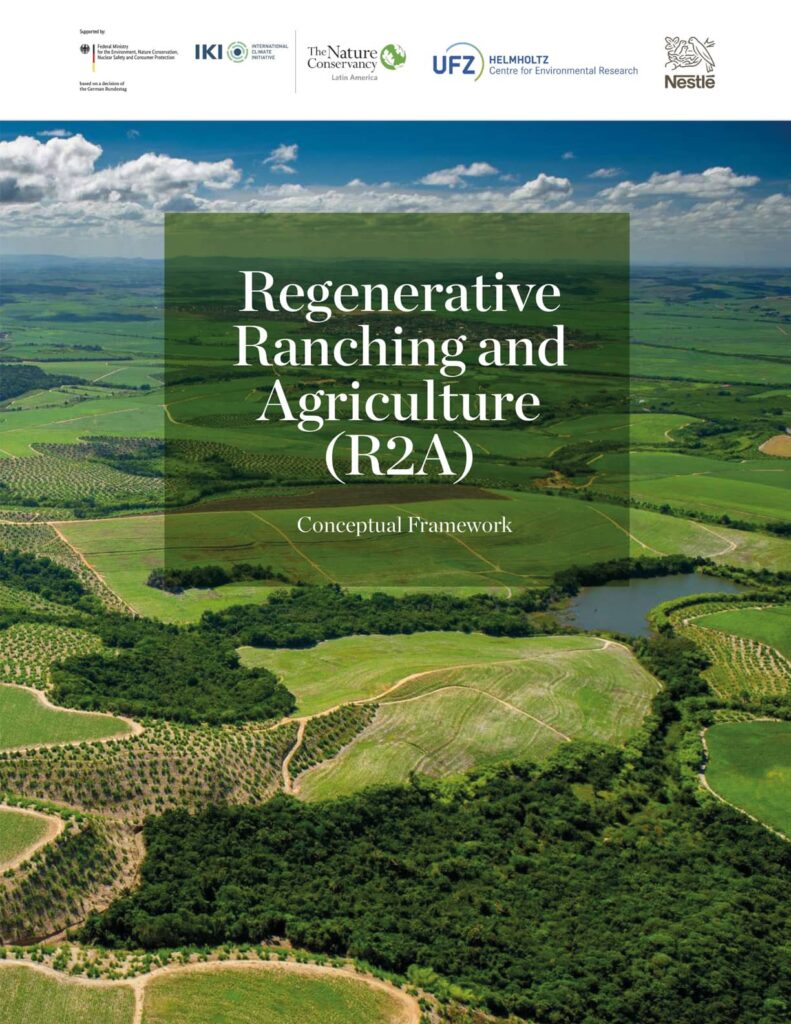
In this document prepared by The Nature Conservancy team, one of the partners of this partnership, concretely presents our vision on Regenerative Ranching and Agriculture (R2A), the principles on which it is based on, and the outcomes it aims to achieve within the framework of Future Landscapes. We believe this resource will be a valuable reference point for our team and our collaborating partners.