Regenerating at scale: From farms to landscapes
Scaling from farms to landscapes.
At Future Landscapes, we understand that regeneration does not occur in isolation, nor can it be achieved solely from the soil or farm plots.
Agrifood systems are deeply interconnected with ecosystems, territories, and the people who inhabit them; therefore, their transformation demands working simultaneously across multiple dimensions and systemic scales.
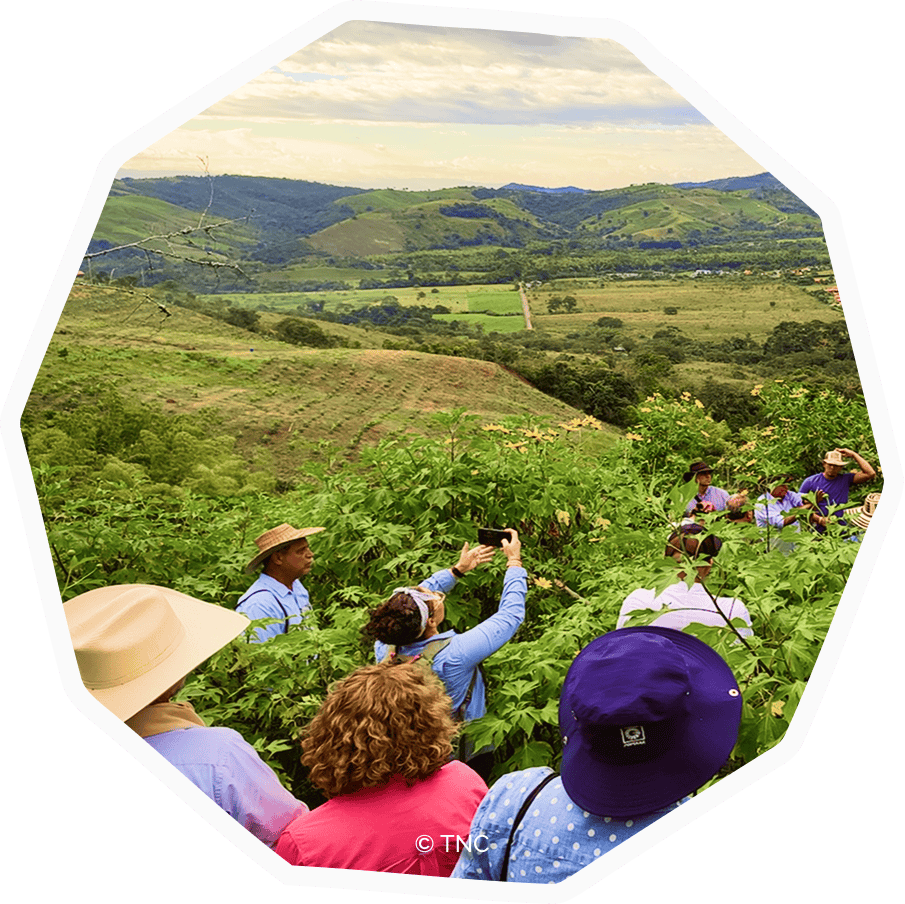
For this reason, our approach goes beyond the farm to operate at the landscape scale: a space where ecological, productive, social, and economic dynamics converge, and where producers, communities, companies, governments, and organizations interact.
Only by bridging these stakeholders and aligning productive practices, business models, governance, and financing is it possible to generate lasting changes that restore nature, strengthen rural livelihoods, and build more resilient and equitable systems.
Scaling from farms to landscapes.
At Future Landscapes, we understand that regeneration does not occur in isolation, nor can it be achieved solely from the soil or farm plots.
Agrifood systems are deeply interconnected with ecosystems, territories, and the people who inhabit them; therefore, their transformation demands working simultaneously across multiple dimensions and systemic scales.
For this reason, our approach goes beyond the farm to operate at the landscape scale: a space where ecological, productive, social, and economic dynamics converge, and where producers, communities, companies, governments, and organizations interact.
Only by bridging these stakeholders and aligning productive practices, business models, governance, and financing is it possible to generate lasting changes that restore nature, strengthen rural livelihoods, and build more resilient and equitable systems.

Today, we work across
3 landscapes distributed throughout 5 Latin American countries.
Discover their stories of regeneration
- In the Gran Chaco, a family-owned business decided to commit to producing food in rhythm with the ecosystem.
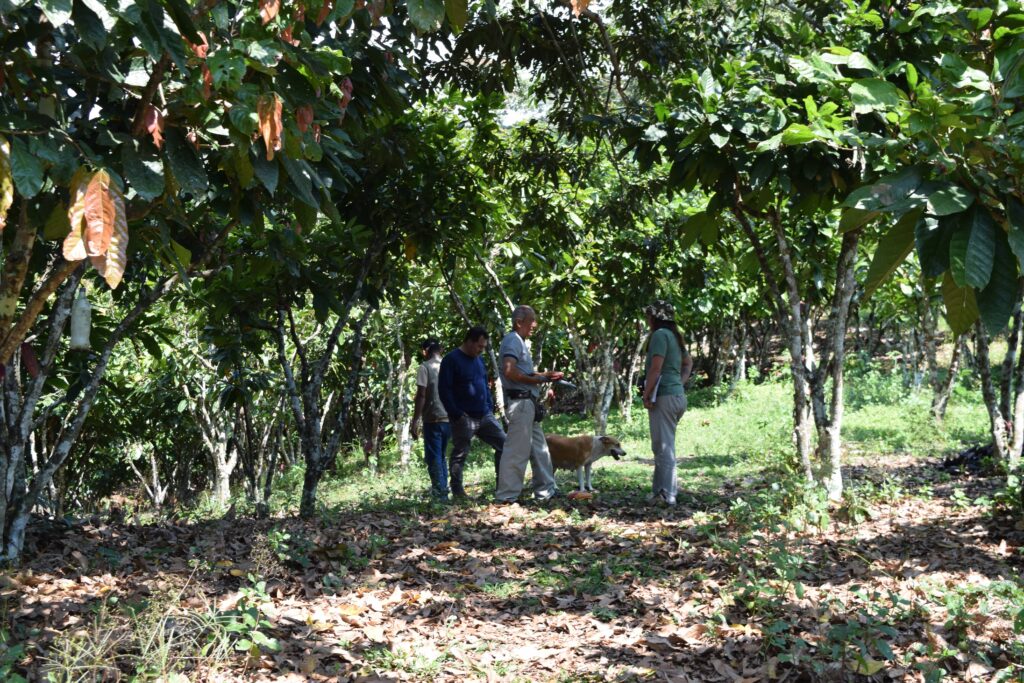
- In the Peruvian Amazon, a family chose to leave behind a history of illicit crops to cultivate a regenerative landscape that today yields cocoa, biodiversity, and stability.
- In the Gran Chaco, a family-owned business decided to commit to producing food in rhythm with the ecosystem.
Contact by Landscape
Contact us