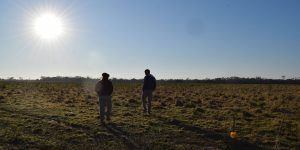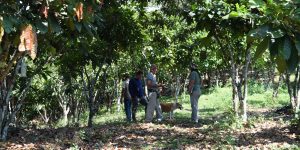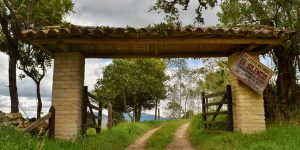
In the Huallaga Valley, a family transformed a territory marked by illicit crops into a regenerative system based on cocoa, forestry, and local knowledge. Finca Moscú demonstrates that regeneration can rebuild economies, landscapes, and futures.

Location: Huallaga Valley, San Martín region, Peru

Ecosystem: High Amazonian jungle

Climate: Warm and humid, high annual precipitation

Structural risk: Historical deforestation and illegal economies

Core focus: Regeneration as ecological and social reconstruction
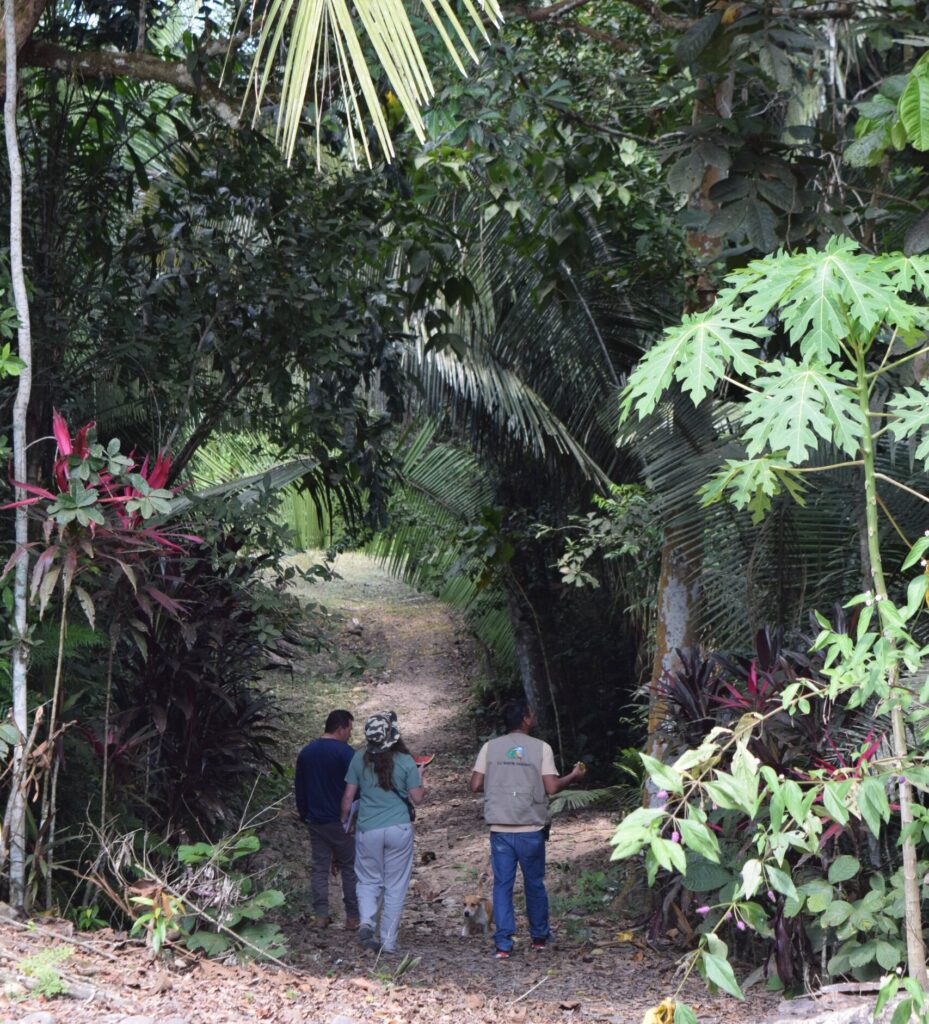
In the high jungle of San Martín, where the humidity sustains a continuous green and recent history has left deep scars, Finca Moscú tells a story of transformation. It is not merely a productive plot. It is the result of a family decision: to leave behind the high-risk economy linked to illicit crops and to rebuild, from the soil up, a different relationship with the territory.
Located in the Sacanche district, just minutes from Juanjuí, Moscú is today a 40-hectare productive unit belonging to the ACOPAGRO cooperative, a network that brings together over 1,500 cocoa-producing families in the region and has been instrumental in the transition toward legal and sustainable economies.
Returning to transform
The history of Moscú is marked by displacement. In the 1990s, violence forced Américo del Castillo's family to abandon the farm. Upon their return, years later, the challenge was not merely productive. It was to rebuild life in a landscape degraded by deforestation and the coca economy.
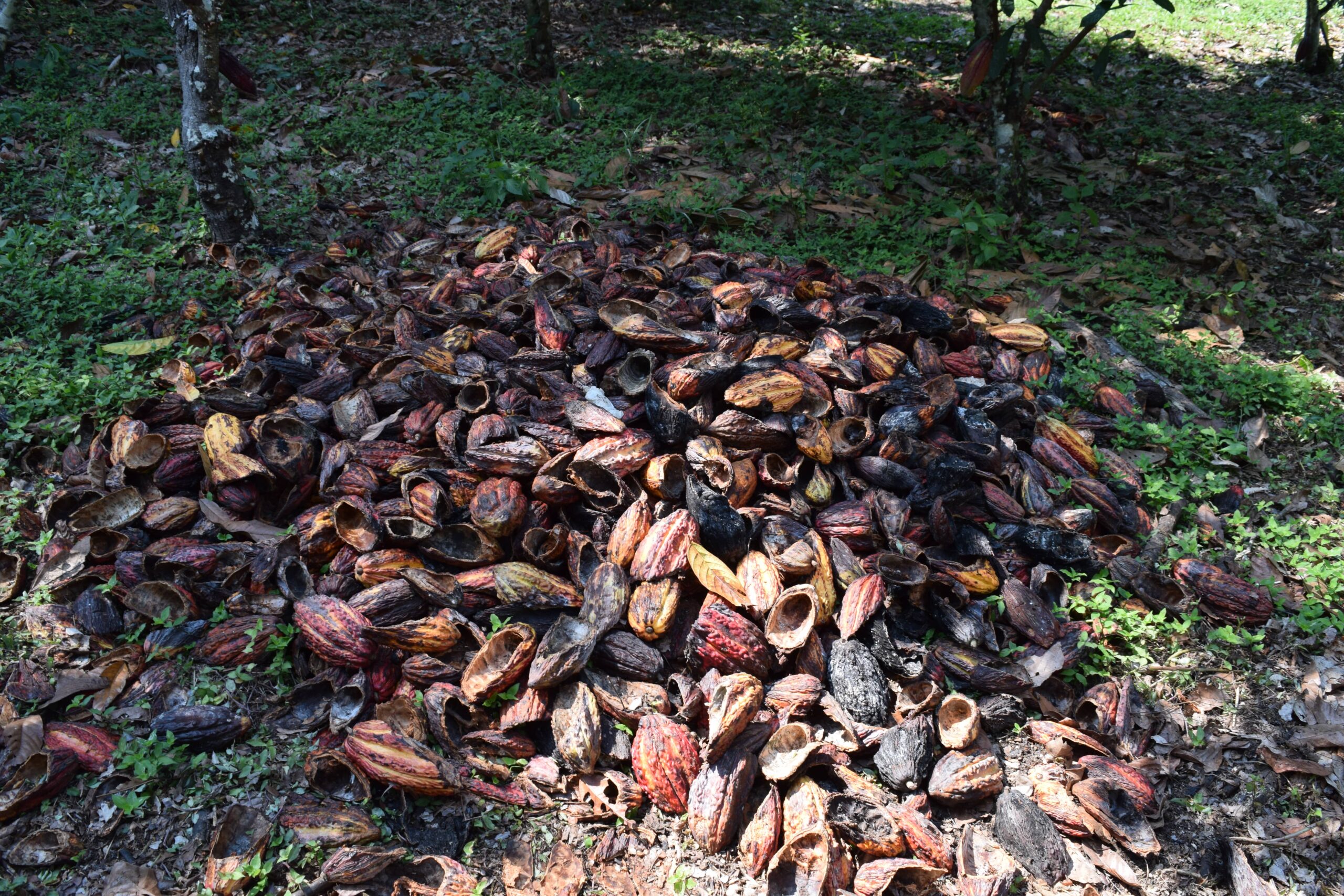
The decision was to commit to cocoa. But not just any cocoa. From the outset, the model was oriented toward agroforestry systems that allowed for production without land clearing, conserved the forest, and recovered the soil's natural fertility.
That process took time. It involved learning, experimentation, and a profound shift in the productive logic. Today, over two decades later, the farm reflects that transition: a stable, diverse system adapted to the conditions of the Amazon.
A system that works with the jungle
Moscú's production model is based on a simple principle: leveraging the forest's ecological logic rather than replacing it.
Of the farm's 40 hectares, a significant portion is maintained as conserved forest, which helps regulate moisture, protect the soil, and sustain biodiversity. This approach is complemented by the cultivation of organic shade-grown cocoa, integrated with timber-yielding trees, fruit trees, and native species.
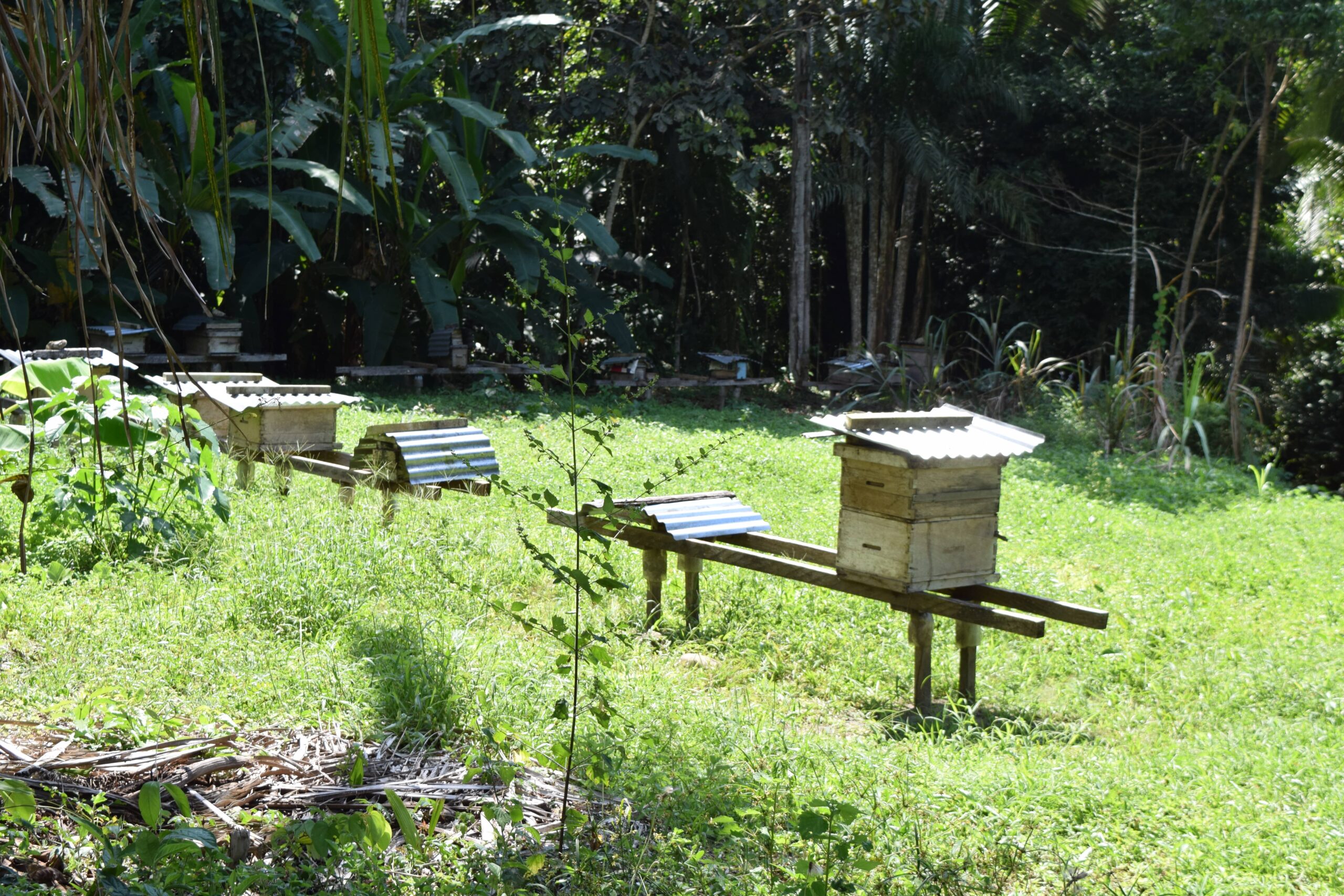
The productive system combines cocoa, beekeeping, timber, fruit, and small livestock, diversifying income streams and reducing dependency on a single crop. At the same time, it recycles organic waste through composting and bio-inputs, closing loops within the farm.
Even water management responds to this logic of efficiency. A gravity-fed irrigation system allows the resource to be distributed without the need for pumps, reducing operational costs and energy dependency.
Productivity with lower costs
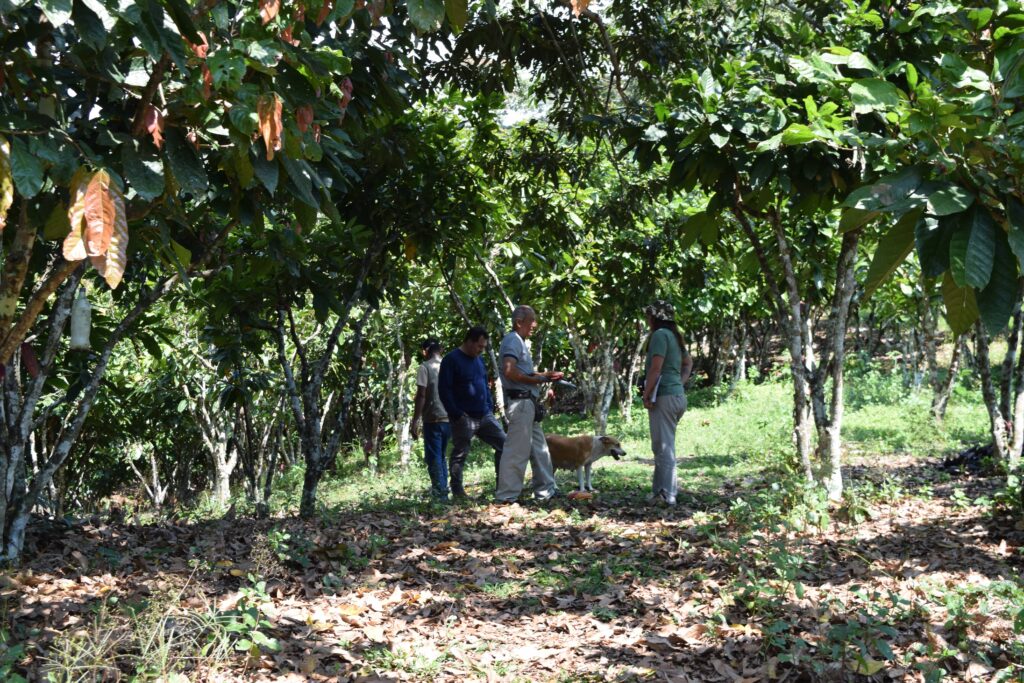
Cocoa is the economic anchor of Moscú. The plantation, established approximately nine years ago, has achieved production levels comparable to conventional systems, but with one key difference: lower costs.
The farm records average yields of between 800 and 1,200 kilograms of dry cocoa per hectare, with a potential to reach up to 2,400 kilograms according to technical estimates by ACOPAGRO. These figures reflect that agroforestry systems are not only viable but competitive when managed appropriately.
The difference lies in the system's structure. By leveraging the soil's natural fertility and reducing the use of external inputs, Moscú manages to sustain productivity with lower costs and greater stability against climate or market variations.
The forest as productive infrastructure
If anything distinguishes Moscú, it is the role of the forest. Here, conservation is not a productive sacrifice. It is a strategy.
The farm maintains expansive areas of forest cover, which has allowed for the return of native fauna such as monkeys, agoutis, pacas, parrots, and diverse bird species. These biological indicators reflect a functional ecosystem where production coexists with biodiversity.
The forest also fulfills key functions for production: it regulates moisture, protects the soil from erosion, and contributes to microclimate stability. In the context of climate change, these benefits translate into resilience.
From the farm to the territory
The impact of Moscú is not confined to its property lines. Its integration into ACOPAGRO has enabled the model to be scaled at the territorial level, strengthening sustainable value chains and consolidating cocoa as an economic alternative in the region.
This process has had concrete effects: the reduction of deforestation, the improvement of family incomes, and the reconstruction of the social fabric in communities that for years were tied to illegal economies.
In that sense, Moscú is not merely a productive case study. It is part of a broader transition where regeneration becomes a strategy for rural development and peacebuilding.
A landscape that sustains life once again
Walking through the farm today is to traverse a territory distinct from what it was three decades ago. Where there was once fragmentation and degradation, today there is vegetative cover, protected soils, and productive diversification.
The stability of the system does not depend on external inputs or ideal conditions. It depends on its capacity to function in equilibrium with the environment.
That is, perhaps, the primary takeaway from the Moscú case: regenerating is not just about changing agricultural practices. It is about transforming the relationship between people, production, and the territory.