
Regenerative business models are key to driving sustainability and generating prosperity for people and nature.
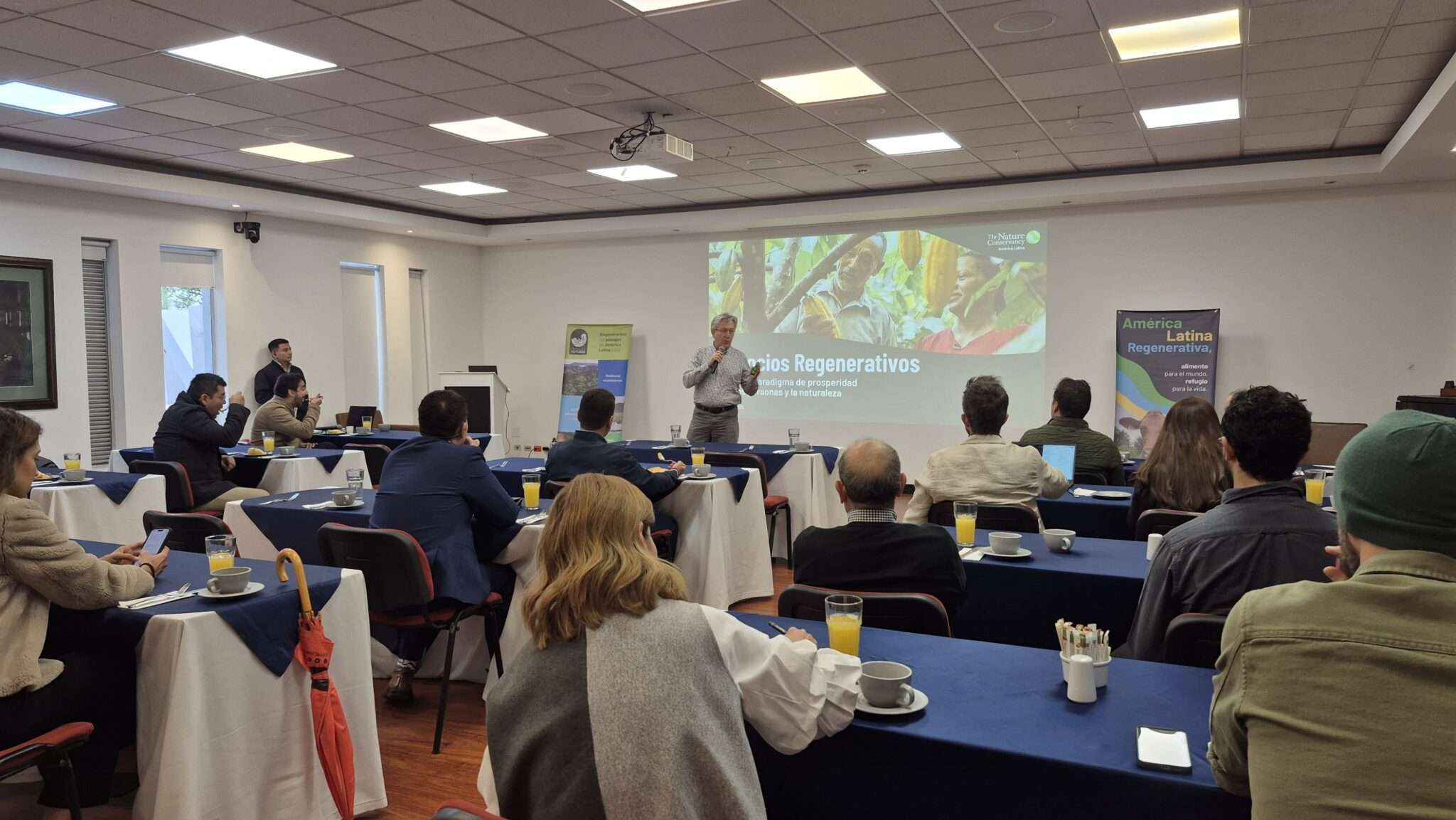
On March 12, 2026, The Nature Conservancy (TNC) convened leaders from over 20 private-sector companies, alongside representatives from civil society, industry associations, and international cooperation agencies, in Bogotá, Colombia, for the Business Breakfast: Regenerative Business, Prosperity for People and Nature.
The gathering aimed to open a strategic dialogue on the corporate sector's role in transforming agrifood systems and to demonstrate, with evidence, that agrifood regeneration is viable, profitable, and scalable. The event opened with welcoming remarks from Andrés Zuluaga, Conservation Director at The Nature Conservancy (TNC) Colombia. In his address, he highlighted TNC's historic collaboration with the corporate sector and the unique position companies hold to actively lead the transformation of business models toward regenerative approaches capable of generating economic value while restoring nature and strengthening territories.
Latin America: A dually strategic region
The agenda also featured a regional context- setting session led by Mauricio Castro Schmitz, TNC's Director of Agriculture for Latin America. He emphasized the dual strategic reality characterizing Latin America: a megadiverse territory harboring nearly 50% of global biodiversity, vast water and forest reserves, and a provider of critical ecosystem services; while simultaneously serving as the world's largest net exporter of food. This strategic position poses an urgent challenge: while agriculture sustains millions of jobs, today nearly 50% of productive lands are already degraded , and agricultural activity consumes nearly two-thirds of the region's available freshwater.
How can we conserve nature while ensuring prosperous and resilient food production amidst population growth and increasingly frequent climate shocks?
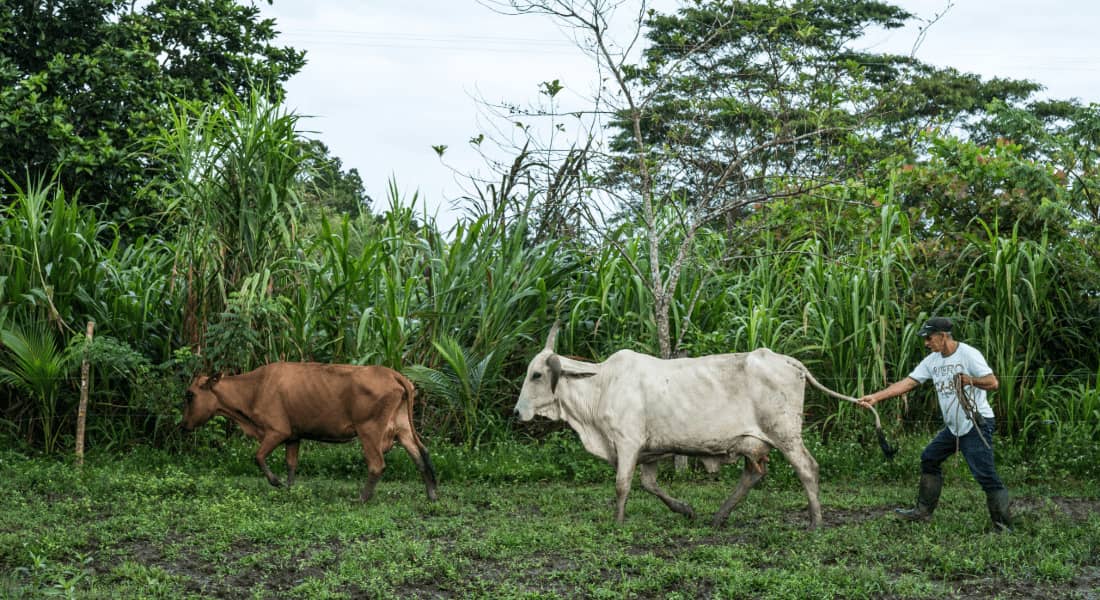
Against this backdrop, regenerative agriculture and livestock ranching emerge as a concrete response. The evidence presented demonstrated that regeneration not only restores soils, biodiversity, and water cycles, but also improves productivity and profitability. Field experiences show a significant reduction in operational costs per hectare and greater resilience to extreme weather events.
At the investment level, recent studies estimate that regenerative agrifood landscapes can achieve Internal Rates of Return (IRR) between 15% and 30% over 10-year horizons.
"Regenerative practices are a very important component in raising productivity, and we have already proven this. Not only do we improve productivity, but we also secure better prices for our products. It is proven that there are market segments willing to pay a premium for these products, recognizing the effort producers make regarding regenerative practices."
Carlos Rojas Arenas, Executive President, Casanare Chamber of Commerce
Regenerative Business Models Framework
Within this context, TNC officially launched the Regenerative Business Models Framework, a tool designed to guide companies in their transition toward models that create, deliver, and capture economic value on par with social and environmental value. The framework offers clear principles and a practical toolkit that enables companies to assess progress, streamline processes, and better communicate their regenerative impact across the value chain.
"The goal of this Conceptual Framework is for any value chain to be able to use these tools as a flexible guide, adaptable to different regions, to transition toward a regenerative approach that conserves ecosystems, strengthens social fabrics, and simultaneously yields profitability."
Alejandra Castro, TNC Colombia
The event featured a corporate panel including Juan Barreneche (Alkosto), Margarita Gaviria (Friogan), and Carlos Rojas (Casanare Chamber of Commerce), moderated by Antonio Solarte of TNC Colombia. The panelists shared learnings from their own experiences, pointing out both the challenges of the transition and the benefits gained in productivity, reputation, and supplier relations. They agreed that regeneration requires robust collaborative networks among companies, producers, territorial entities, investors, and researchers to achieve lasting impacts.
"We have a firm conviction that regenerative models are achieved through coordinated work with producers, NGOs, and public and private entities."
Margarita Gaviria, Sustainability Director, Friogan
"This work is very important because it is an alliance with everyone. It is the entire chain. It is not just the retailer. It is the producer, the processor. From birth to the table."
Juan Gonzalo Barreneche, Meat Director, Alkosto
Opportunities for Collaboration
To close the gathering, Pedro Castro from TNC presented a collaborative roadmap aimed at taking regeneration from concept to corporate action. These opportunities allow companies to move forward with measurable impact across the value chain and at the landscape scale.
The main avenues for collaboration include:
- Applying the Regenerative Business Models Framework to align economic, social, and environmental goals, conduct self-assessments, and prioritize strategic actions.
- Designing regenerative procurement criteriaand strengthening supply chains, reducing risks, and creating market signals for producers in transition.
- Developing regenerative territorial projects through mechanisms such as Obras por Impuestos (Works for Taxes), Payments for Environmental Services (PES), and Green Footprints, transforming investments into traceable impact.
- Convening technical-business roundtablesand leadership networks to facilitate co-creation, collective learning, and the scaling of regenerative solutions.
- Mobilizing financial instruments and capital, connecting productive opportunities with investments aligned with climate resilience and ecosystem restoration.
Across all these avenues, TNC acts as a strategic collaborator, providing evidence, territorial expertise, and practical tools to support business decisions that integrate profitability and regeneration..
The Business Breakfast evidenced a growing willingness within the private sector in Colombia and Latin America to lead the transition toward regenerative models. Companies are thus consolidating their role as strategic allies in scaling solutions that regenerate nature, strengthen territories, and ensure long-term shared prosperity.