Reflections from the third annual Future Landscapes convening in Pucallpa, Peru
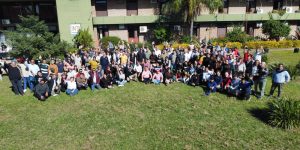
From September 29 to October 2, 2025, in the Peruvian Amazon, over 50 representatives from Argentina, Colombia, Ecuador, Paraguay, and Peru, alongside regional and global leaders from The Nature Conservancy and the Helmholtz Centre for Environmental Research (UFZ), convened in Pucallpa to share learnings and co-create strategies that drive regenerative agriculture and livestock ranching across Latin America. Led by TNC’s regional Regenerative Agriculture and Livestock (R2A) team under the Future Landscapes framework, and supported by the IKI program and the German government, the convening provided a dynamic space for exchange, planning, and capacity building.
The landscape as a living classroom
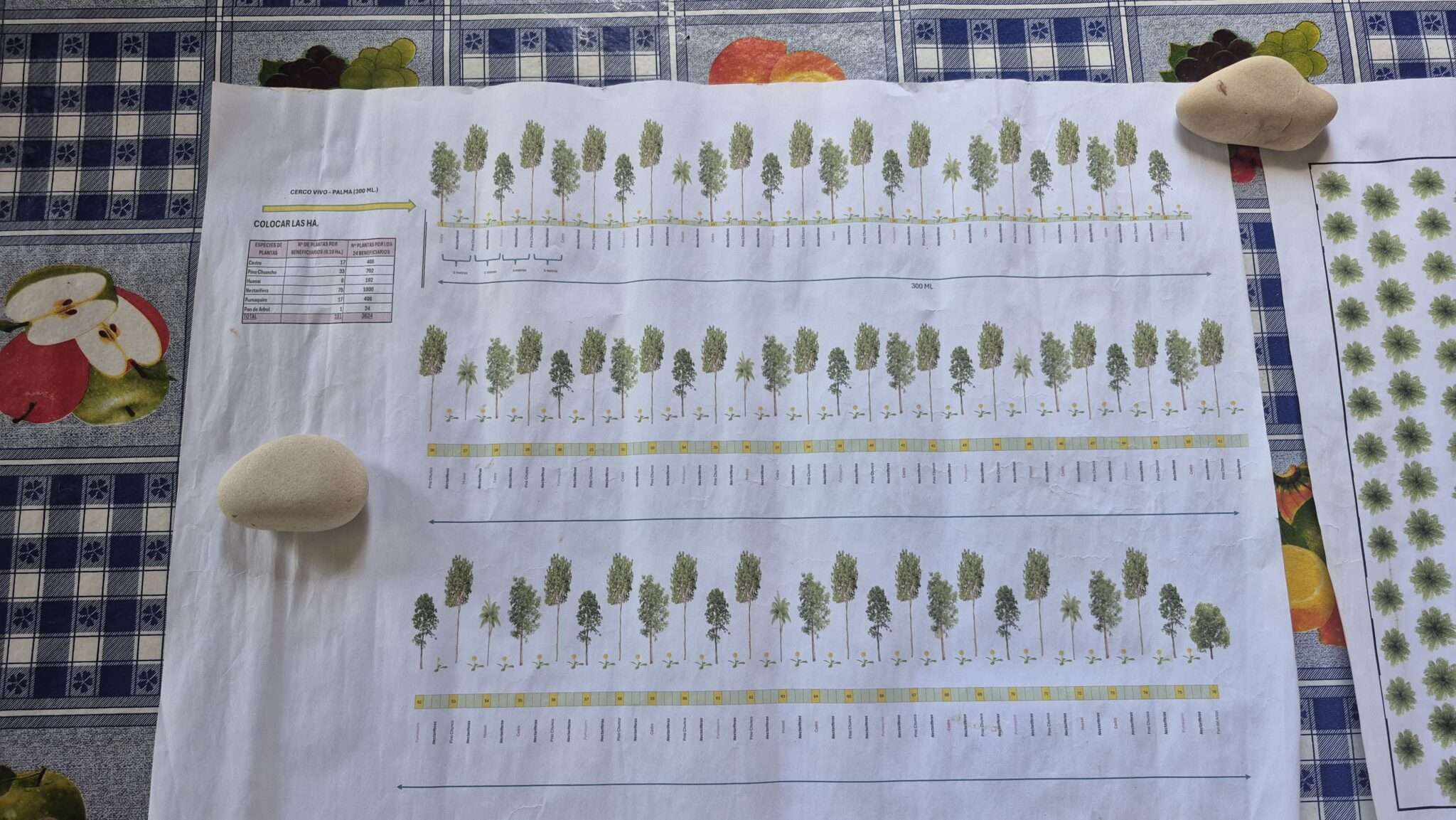
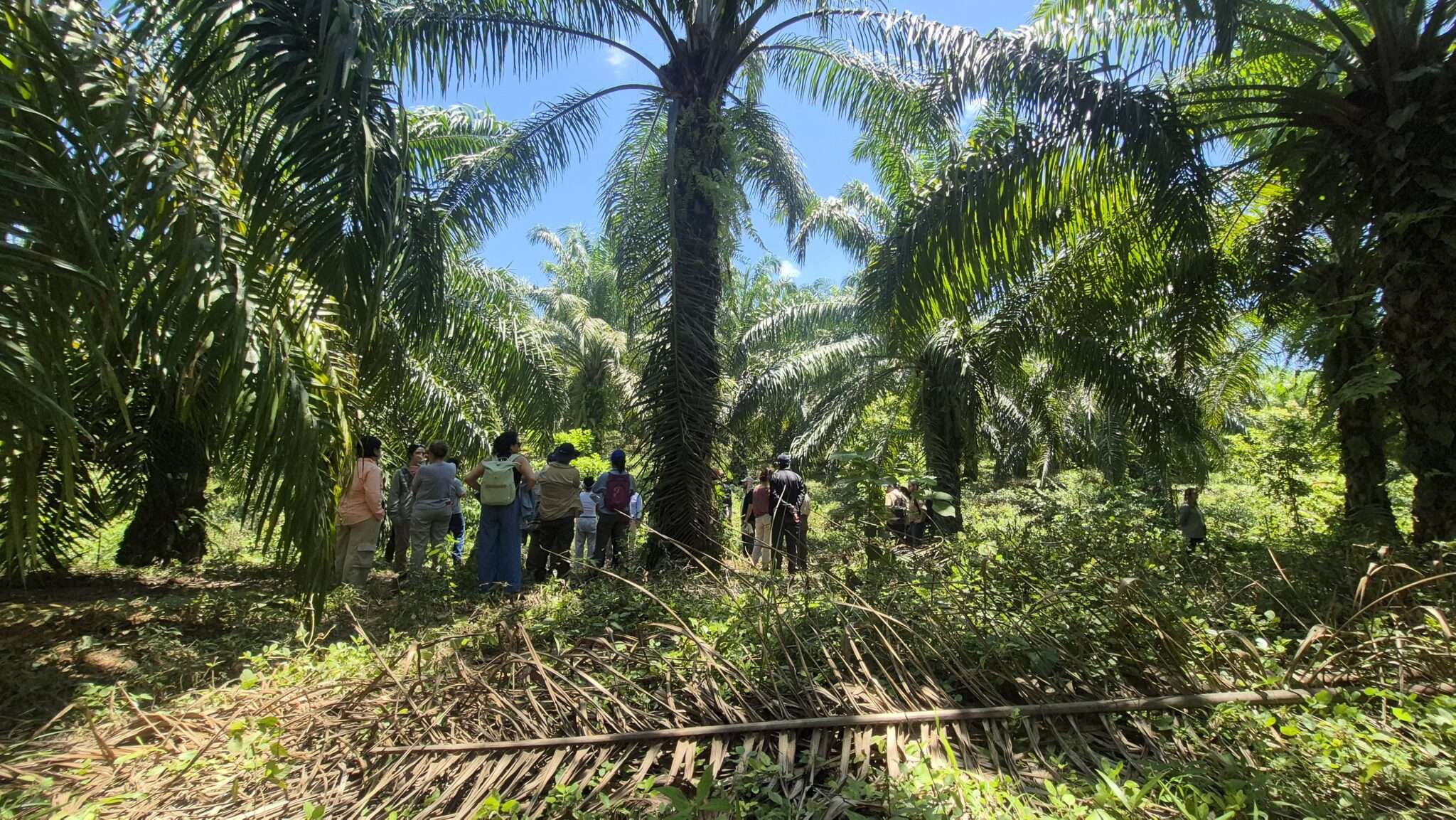
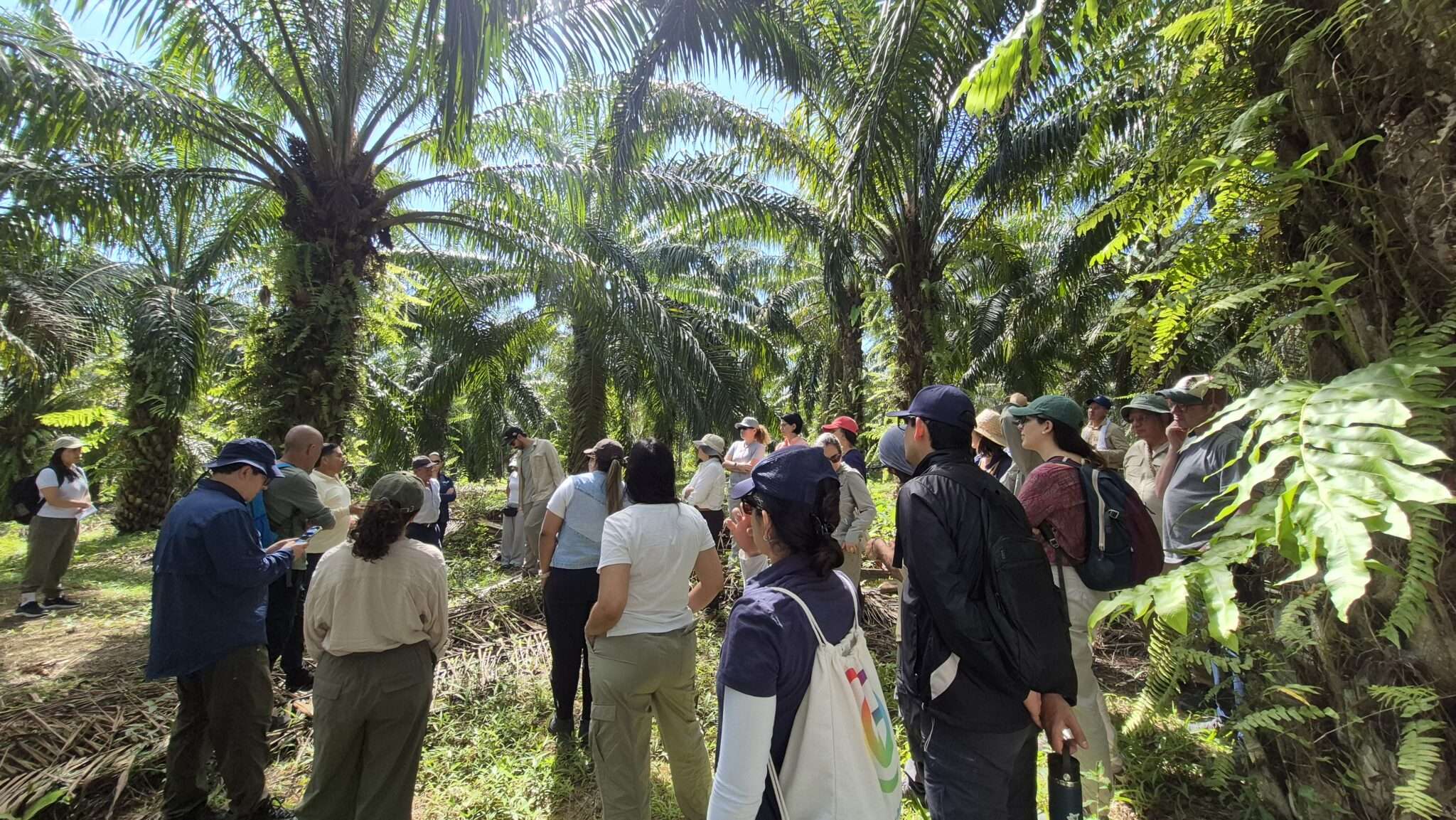
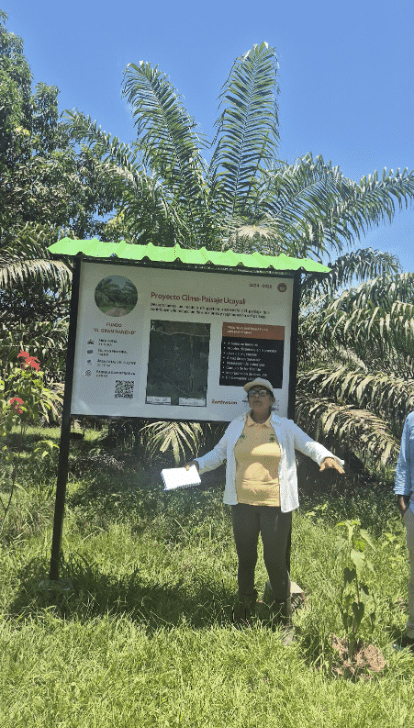
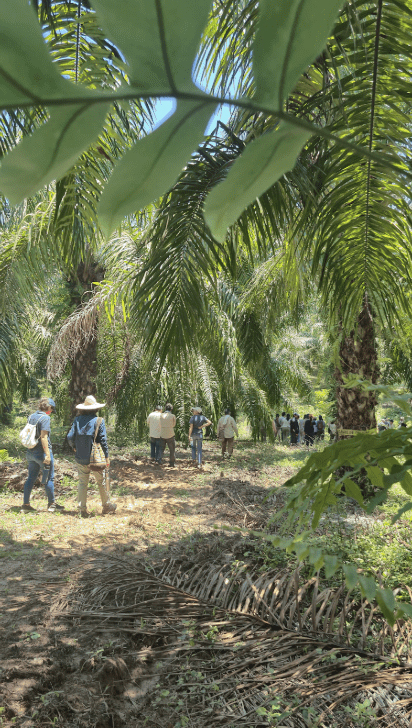
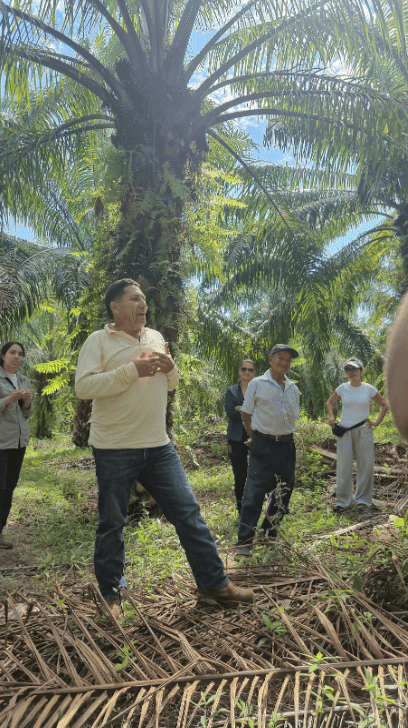
Day one took us to the Neshuya district (Ucayali region), where local oil palm producers such as Alberto Angulo, Rosario Gonzales, and Ana Villasis shared how regenerative practices have transformed their livelihoods and productive activities. Across their plots, we observed various implemented interventions and collaborative efforts alongside partners such as Solidaridad, Innova Palma, Earthworm, and COFIDE, who are driving the scalability of these practices through public-private partnerships.
Furthermore, we visited the AOPSA palm oil refinery and the OLAMSA derivatives plant, where we learned how smallholder farmers have formed a network enabling them to integrate into broader value chains while maintaining sustainability standards.
Adaptation as a regenerative pathway
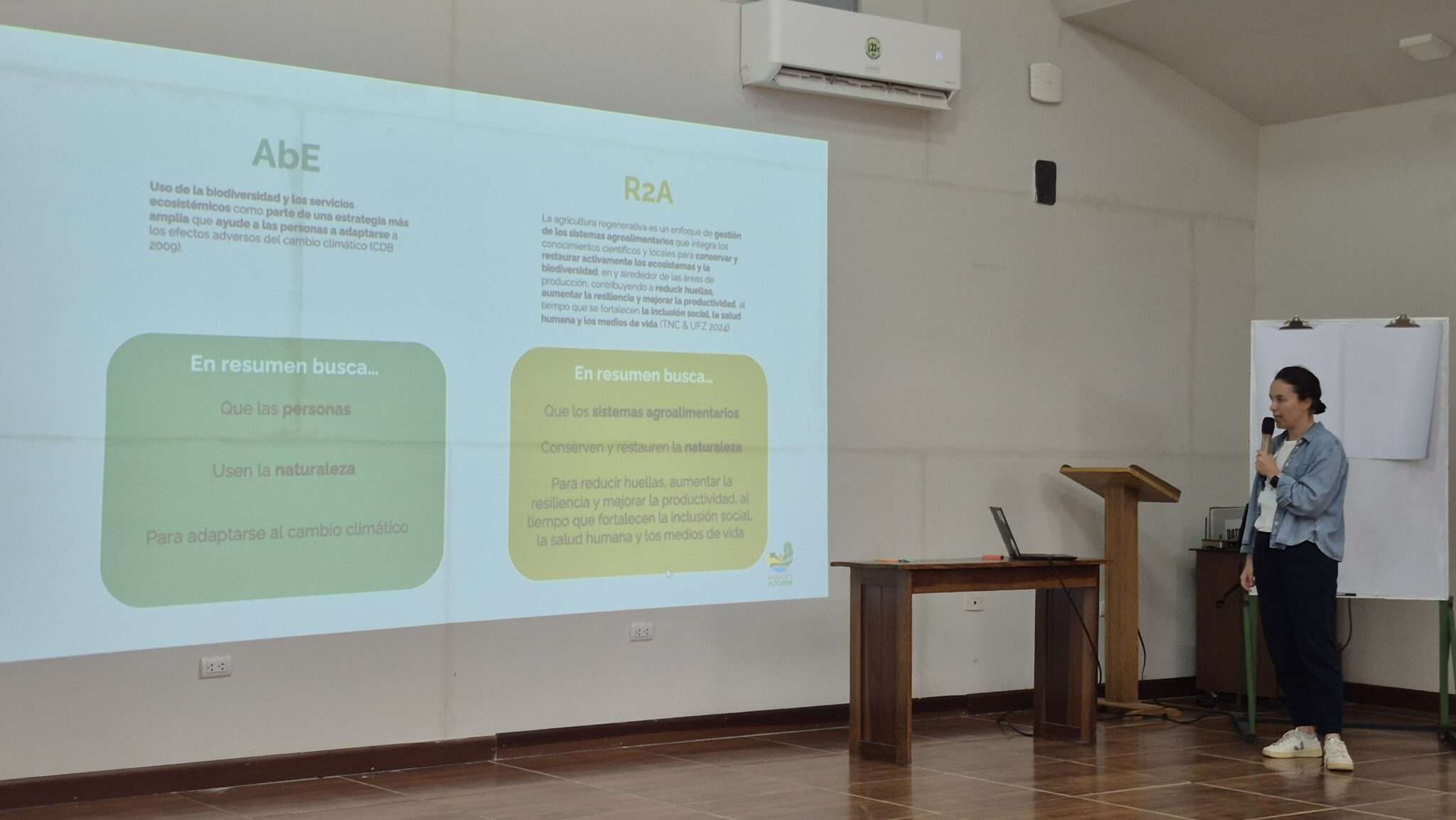
Throughout the subsequent days of the convening, conceptual and practical tools were provided to ensure that Ecosystem-based Adaptation (EbA) is mainstreamed into R2A strategies. Through collaborative exercises guided by TNC’s Global Climate Adaptation team, participants explored actionable pathways to identify and address climate vulnerabilities and hazards, acknowledging that a just and equitable adaptation is key to achieving lasting impacts.
Scaling with purpose
During the gathering, each country presented its progress and challenges looking toward 2030, focusing efforts on Iconic Landscapes with clear goals and shared assumptions. Scalability roadmaps integrating public policies, financial mechanisms, multi-stakeholder partnerships, and regenerative business models were discussed, acknowledging that systemic change requires both innovation and collaboration.
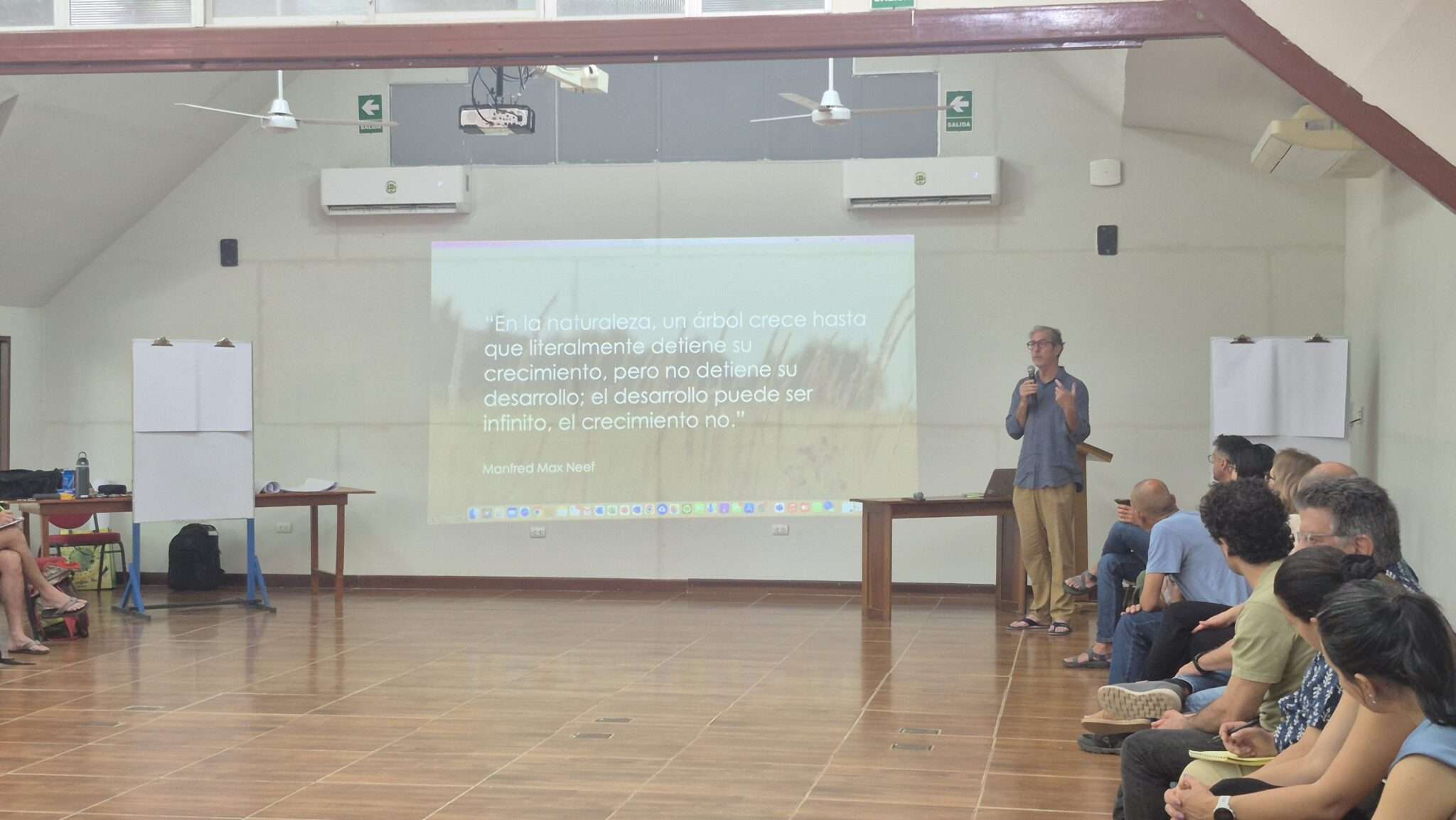
We also explored diverse models for addressing complexity. An introduction to the vector theory of change, communities of practice, and the adjacent possible, guided by Ronald Sistek, challenged us to think more creatively about navigating uncertainty and designing actionable plan.
Leveraging the learnings from the Regeneradores Summit held in Colombia in July 2025, a proposal was presented to establish a platform aimed at fostering networking among Regeneradores across Latin America. This platform will seek to connect diverse stakeholders within the agrifood system to promote knowledge exchange, facilitate local and regional collaboration, and accelerate the transition toward regenerative systems in Latin America.
Highlights of Local Strategies
During the gathering, each country presented its progress and challenges looking toward 2030, focusing efforts on Iconic Landscapes with clear goals and shared assumptions. Scalability roadmaps integrating public policies, financial mechanisms, multi-stakeholder partnerships, and regenerative business models were discussed, acknowledging that systemic change requires both innovation and collaboration.
- Argentina: The PATChaco network bridges ancestral knowledge and partnerships to regenerate the Gran Chaco, combining on-the-ground training
with a regenerative business model that is already drawing interest from provincial governments.
- Colombia: The PATChaco network bridges ancestral knowledge and partnerships to regenerate the Gran Chaco, combining on-the-ground training
with a regenerative business model that is already drawing interest from provincial governments.
- Perú: In Ucayali, demonstration plots, financial literacy, and public-private partnerships strengthen regenerative agriculture as a response to climate and social vulnerability.
- Ecuador: Agroforestry systems and regenerative bio-inputs are demonstrating their impact on the hydrosocial management of watersheds, working alongside Water Funds and advancing policy advocacy.
- Paraguay: Cooperatives, municipalities, and territorial governance platforms are scaling regenerative models in the Chaco through commercial alliances, financial inclusion, and technical training.
A regenerative future is possible
This third annual convening leaves us with a shared conviction: regeneration can flourish if we support each other, teach one another, and walk together. Let us continue sowing seeds of hope so that the Future Landscapes we envision can bloom: territories where Latin America's agrifood systems act as allies for ecosystem protection, human well-being, and prosperous economies.